Searching the word “scam” usually means you are asking two very different questions at once: will my money disappear, and is this marketing telling me the truth? Those questions have different answers here, and separating them is the whole point of this page.
This is an independent review site, not the official product page. We read the vendor's sales material end to end and then tried to source every factual claim it makes. Some claims checked out immediately. Others could not be checked at all. That is not because they were disproved, but because nothing exists to check them against.
Below, the verifiable facts come first, the unverifiable claims second, and the marketing signals a careful buyer should notice third. We are not accusing anyone of fraud; we have no evidence of that, and saying otherwise would be both unfair and reckless. We are drawing a line between what is documented and what is merely asserted, and letting you decide which side of it your $39 belongs on.
What is the short answer? Mystery School Code is a genuine digital product sold through ClickBank, delivered after payment, with a named creator and a published refund route, so it does not behave like a fraud. Its marketing, however, rests on an origin story and a mechanism nobody has independently verified. “Not a scam” and “the claims are proven” are two different statements, and only the first one holds.
Because the word is doing two jobs at once. A scam, in the everyday sense people mean when they type it into a search box, is a transaction where you pay and receive nothing, or where your card details end up somewhere they should not. That is a question about the seller and the payment route. The second, quieter question is whether the sales page describes the product accurately. That is a question about evidence, not about theft.
On the evidence available, no. The purchase runs through ClickBank, a retailer that has been selling digital goods online for well over two decades and that stands between you and the vendor as the merchant of record. You are not wiring money to an anonymous inbox. The product arrives, the receipt arrives, and there is a documented process for asking for the money back.
Here the honest answer gets uncomfortable. The story used to sell Mystery School Code (an ancient mystery-school lineage sitting behind a two-minute audio track) has no sourcing behind it that we could find, and the suggested effects of listening have never been tested by anyone independent of the vendor. Nothing here has been shown to be false. Nothing has been shown to be true either, and a sales page that reads like established fact is not the same thing as established fact.
Because it changes what you should actually worry about. If your fear is losing $39 to a phantom seller, the structure of this purchase largely answers that. If your expectation is a documented method with demonstrated results, the gap between the marketing and the evidence is the thing that will disappoint you, and no refund policy repairs a mismatch of expectations after the fact. Our hands-on Mystery School Code review covers what the product is actually like to use once that expectation is set correctly.
Five things about this purchase are checkable, and all five check out. It is a short list, but it covers the parts of a transaction where a genuine fraud usually falls apart.
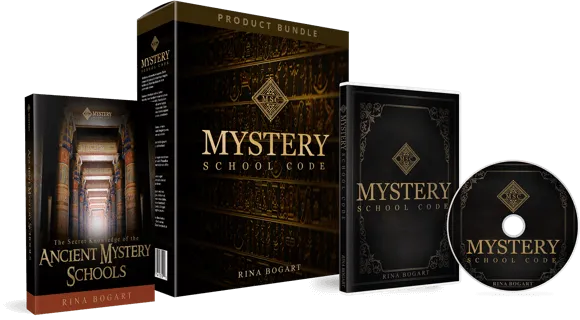
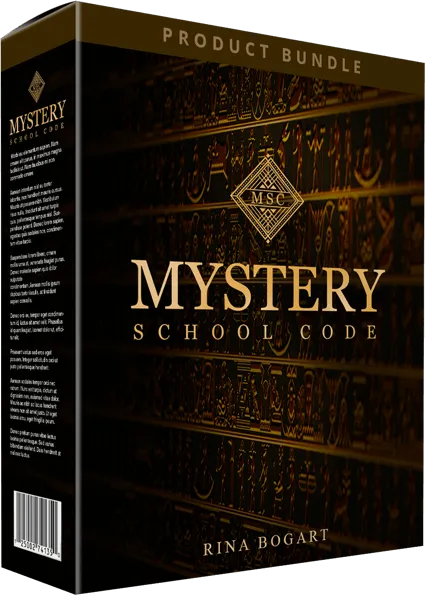
Yes. Payment is followed by a receipt and by access to an online members area holding the audio file and the companion reading module, “The Secret Knowledge of The Mystery Schools”. Nothing is shipped, despite product photography showing a box and a disc. That artwork represents a download. For the delivery mechanics in detail, the online program guide walks through the members area.
ClickBank. It is the merchant of record, it takes the card payment, it issues the receipt, and it is the party a refund request goes to. Practically, that means your card data is handled by an established platform rather than by a one-product vendor's own script, and the entry on your statement reads as a ClickBank charge rather than as the product name.
Yes. Rina Bogart is named as the creator on the vendor's material, and Rick Schoflin is credited there as the audio engineer. A named seller is meaningfully better than an anonymous one: there is somebody to hold responsible. Note the limit, though: a name being published is not the same as credentials being confirmed, and we deal with that below.
Yes, and it is published in two places with two different numbers. ClickBank's marketplace standard is a 60-day window; the vendor's sales page advertises 365 days, with refund requests handled by email. Either way a written policy exists, which is more than some digital sellers offer.
Yes. $39 as a one-time payment, as listed on the vendor's order page at the time of writing, with no subscription attached. Prices change, so check the current offer before you commit. What we could not observe is the post-purchase screens, so we will not tell you there are no upsells. Read each page after checkout instead of clicking through it.
Everything that makes the product sound remarkable sits in this section. None of it is disproved; all of it is unsourced. Listed honestly, item by item:
No. The ancient Egyptian framing is presented as background, but no artefact, archive, translation or scholarly reference is offered to support it, and we found none independently. It functions as atmosphere: it sets a mood for a piece of audio. Treat it roughly the way you would treat the backstory printed on a bottle of perfume.
None that can be traced. A claim that particular knowledge passed down through a named tradition is exactly the kind of claim historians support with sources, and there are no sources here. The marketing also reaches for associations with famous historical figures; we do not repeat those associations on this site, in either direction, because there is nothing behind them to discuss.
Not independently. Rick Schoflin is credited by the vendor as the engineer behind the recording, and that credit is all we can report. We could not confirm the professional history attached to that name from any source outside the sales material, so it should carry exactly as much weight as an unverified credit deserves: some, but not much.
No mechanism has been demonstrated. The track is described as engineered around specific sound frequencies intended to act on the subconscious. There is genuine research into sound, attention and relaxation in general, but none of it establishes the pathway this product implies, and none of it examines this recording. A plausible-sounding explanation is not the same as a tested one.
Not that anyone has published. We found no clinical trial, no peer-reviewed paper and no independent laboratory testing of the Mystery School Code audio, and the vendor points to none. That absence is the single most important fact on this page, and it is why you will not find a results claim anywhere on this site. What the product can honestly be described as is a two-minute daily listening habit; our benefits breakdown keeps to that framing deliberately.
Does “no evidence” mean it does not work? No. It means nobody can tell you either way, and anybody who does is guessing. An untested product is not a debunked one. What the absence of testing does is move the entire risk onto the buyer, which is why the price and the refund window matter far more here than any claim on the sales page does.
These are patterns, not proof of dishonesty. Each one is common across the whole digital-products category, and knowing why they exist makes you a harder person to oversell, here or anywhere else.
Because the lower figure is simply the price. When a page shows a struck-through higher figure beside a lower one you can supposedly only have today, and that same pairing is still there next month, the higher number was never a real trading price. It is an anchor, placed to make the actual price feel like a rescue. The correct response is to ignore the crossed-out figure entirely and ask whether the real number is worth it on its own merits. It is also why you will not see a countdown timer or a discount badge anywhere on this site.
They tell you about the copywriter, not the product. Phrases built on “the most powerful” or “the only” are unfalsifiable by design; no test could confirm or refute them, which is precisely why they get used. A genuinely confident seller tends to describe what a thing does and let you judge the scale for yourself. When the superlatives are doing the persuading, the specifics are usually thin.
As unverifiable by construction. A dramatic before-and-after story on a sales page arrives without a name you can contact, a date you can check, or any way to establish that the person exists. That is true of glowing stories and cautionary ones alike. Notice too that stories in this category describe life changes rather than the thing the product measurably does, which means a story is being used exactly where a study would be more convincing. We reproduce none of them here.
Because borrowed authority is still borrowed. Attaching a product to famous historical or religious figures transfers their credibility onto a modern download without earning any of it, and the association is usually impossible to check, which is what makes it safe for a marketer to assert. When you meet one, mentally delete it and re-read the offer without it. If the offer still stands up, fine. If it collapses, the association was carrying the weight.
One more pattern is worth naming: the copycat domain. Sites carrying near-identical versions of this sales letter already rank for the product's name, which makes it easy to mistake repetition for consensus. Our guide to the review landscape explains how to tell an independent write-up from a rewritten sales page.
Are red flags the same as fraud? No. Aggressive marketing is legal, extremely common, and tells you how the page was written rather than whether the seller will honour the order. Read the flags as a reason to verify before buying and to keep your paperwork afterwards, not as an accusation, and not as a reason to skip the checks either.
Two layers, one primary and one backstop. The primary route is the ClickBank refund request, because ClickBank is the retailer and holds the transaction. The backstop is a card chargeback through your own bank, which exists whether or not the seller co-operates.
Both have limits worth understanding before you lean on them. The refund route depends on acting inside the window, so the date of purchase matters more than the strength of your reasons. The chargeback route is not a convenience button: banks expect you to have tried the retailer first, decisions take weeks, and raising one over a $39 digital item that was delivered as described is a weak case rather than an automatic win. The sensible order is retailer first, bank only if the retailer route genuinely fails.
Step-by-step refund instructions do not belong on this page. They live in our free trial and refund guide, which also explains why this product has a refund window instead of a trial. What belongs here is the part that matters for judging legitimacy: a documented, platform-backed way out is one of the strongest signals available that a seller expects to keep doing business.
Affiliate link. Read the order page terms yourself before buying. Prices and guarantee wording can change.
Because they come from two different parties: the seller and the retailer. The mechanics of that split, and how a refund is actually requested, are covered in our Mystery School Code free trial and refund guide. What matters here is narrower: what the gap tells you about how much of the promise is enforceable.
For a legitimacy check, the gap is informative in a specific way. It is not a lie, and a vendor offering more than the platform requires is not a bad sign in itself. But a promise only one party can enforce is weaker than a policy the retailer backs, and a buyer who assumes a full year of cover may find the practical route narrower than the headline. That is why every mention of the guarantee on this site gives both numbers together, why the shorter platform-backed figure is the one used in our structured data, and why you will never see “365-day guarantee” stamped on a badge here.
Read as a trust signal rather than as an offer, the honest reading is this: the advertised year is the seller's own undertaking, and the part of it you can lean on is the part the retailer stands behind.
This table is the page in miniature. The left column is what the marketing puts forward, the middle column is what we could actually source, and the right column is our assessment as an independent review site.
| What the marketing claims | What is actually documented | Our assessment |
|---|---|---|
| A real product you receive after paying | Delivered as a download through a members area; receipt issued | Confirmed |
| A trustworthy checkout | ClickBank is the retailer and payment processor of record | Confirmed |
| A named creator behind it | Rina Bogart named as creator; Rick Schoflin credited by the vendor | Names published; credentials not independently confirmed |
| A money-back guarantee | ClickBank standard is 60 days; the vendor advertises 365 | Partly platform-backed; rely on the shorter window |
| A one-time $39 price | $39 listed at the time of writing, no subscription | Confirmed; post-checkout screens not observed |
| Ancient mystery-school origins | No artefact, archive or scholarly source offered or found | Unverifiable; treat as narrative |
| Sound frequencies engineered for a specific effect | No published mechanism, no testing of this recording | Unverified |
| Life-changing outcomes for listeners | No trial, no peer-reviewed study, no independent measurement | No evidence either way |
A fair verdict has to name both groups, because the same product produces two completely different experiences depending on what was expected of it.
Anyone who buys expecting a documented method, a demonstrated mechanism, or a specific result by a specific date. The material does not contain a method in that sense (it contains a short recording and a reading module), and nothing about it has been measured by anyone independent.
Also at risk: anyone who reads the 365-day figure as guaranteed cover, and anyone for whom $39 is not money they can afford to write off. If the amount matters to your month, an untested purchase is the wrong place for it.
Anyone spending a small, discretionary amount on a curiosity, with the refund date noted and no expectation beyond a two-minute daily listening habit. That buyer gets exactly what was described: a short audio file, a companion module, instant access.
People who already enjoy ambient or meditative audio tend to land here too, because the format is familiar and the judgement they are making is whether they like it, not whether it has been proven.
Our position, stated plainly: we found nothing that supports calling Mystery School Code a fraud, and nothing that supports calling its claims proven. It is a low-priced, content-light digital product wrapped in marketing that promises considerably more than it can show. Whether that is acceptable depends entirely on which of the two buyers above you are. That judgement is yours to make, not ours. The Mystery School Code overview sets out what the package contains before you decide.
None of this is specific to one product. It is the routine that turns an impulse purchase into a decision you can unwind, and it takes about four minutes.
What would change our assessment? Published independent testing of the recording, a sourced account of the historical claims, confirmation of the engineering credentials, or a visible pattern of buyers reporting refused refunds. We re-check this page as new information appears; until then the honest position is the one above: documented where it can be, unverified where it cannot.
No evidence of fraud was found, but that is not the same as saying the claims are proven. Mystery School Code is a real digital product that is delivered after payment, sold through ClickBank, with a named creator and a published refund route, so as a transaction it behaves like a normal purchase. As a set of claims, however, the origin story and the suggested effects of the audio are unverified, and no independent testing of the recording exists. Judge those two questions separately rather than together.
ClickBank does. Mystery School Code is listed on the ClickBank marketplace, which means ClickBank is the retailer of record and the party that processes the card payment, sends the receipt and handles refund requests. Your card details go to an established payment platform rather than to a small vendor's own checkout script, and the charge on your statement comes from ClickBank rather than from the product name.
No. We found no clinical trial, peer-reviewed paper or independent laboratory testing of the Mystery School Code recording, and the vendor does not publish one either. Broader research on sound and relaxation exists, but none of it tests this specific track or supports the outcomes the marketing suggests. Anyone telling you the program is "scientifically proven" is stating something that cannot currently be sourced.
It cannot. The ancient mystery-school framing used to market Mystery School Code is a narrative device, not a documented provenance. There is no artefact, archive reference or scholarly citation offered to support it, and none that we could locate independently. Treat the story as marketing atmosphere rather than history, and base your buying decision on the format, the price and the refund window instead.
Two layers. First, the ClickBank refund route: ClickBank is the retailer for Mystery School Code and its published marketplace standard is a 60-day window, while the vendor's own sales page advertises 365 days. Confirm the current terms on the order page before you buy. Second, a card chargeback through your bank as a backstop if the retailer route fails. Our free trial and refund guide covers the steps in detail.
Four stand out. A "discount" price anchor that never actually expires, superlative language about the power of the audio, dramatic personal outcome stories with no way to check them, and the association of the product with historical figures and traditions it has no documented link to. None of these proves dishonesty on its own, but together they tell you the sales page is written to persuade rather than to inform, so the burden of verification sits with you.
The checkout itself is ClickBank's, which is a long-established retailer handling card data on encrypted pages, so it is not the equivalent of paying an anonymous stranger. The sensible precautions are ordinary ones: pay by card rather than bank transfer so a chargeback stays available, keep the receipt email that names the Mystery School Code order, and read each screen after checkout rather than clicking through it.
We found none. There is no Trustpilot profile, Better Business Bureau file, regulatory action or court record for Mystery School Code that we could locate, which is worth reading carefully: the absence of complaints is not a clean bill of health, it mostly reflects how small and how recent the product is. Our guide to the review landscape explains why so little independent feedback exists.
Four sources plus the vendor's own sales material. There is no Trustpilot profile, Better Business Bureau file, regulatory action or peer-reviewed study for this product, so none is cited. No customer star rating appears anywhere on this site either, because none exists to report.
Affiliate link. We may earn a commission at no extra cost to you.
Written & reviewed by: Mystery School Code Editorial Team
This page was written by the Mystery School Code Editorial Team. We read the vendor's sales material in full, attempted to source every factual claim in it, checked the retailer's published policies, and reported both what we could confirm and what we could not. We make no accusation of fraud, and we repeat no unverified claim as fact. We are not the vendor and this is not the official website. This page contains affiliate links, and we may receive compensation if you buy through them at no extra cost to you. Last updated September 11, 2026.