Last Updated: September 11, 2026 | Analysis by Mystery School Code Editorial Team | 9 Min Read

Mystery School Code Reviews: Who Wrote Them, and Which Ones Are Worth Reading?

Most people searching for Mystery School Code reviews are not looking for one more opinion. They are trying to work out whether the opinions already out there mean anything. This page answers that question instead of adding to the pile.

Mystery School Code is a $39 digital program built around a single 120-second audio track plus a companion reading module called “The Secret Knowledge of The Mystery Schools.” It was created by Rina Bogart and is sold through ClickBank with instant members-area access. That is the whole product, and our own hands-on findings live on the Mystery School Code review page. This page is about something different: the review landscape (who has actually published about this program, how much of it is independent, and how a reader should weigh what they find).

We are an independent affiliate site, not the vendor and not the official website. That matters to this subject in particular, because the analysis below applies to us exactly as much as it applies to everyone else writing about this product.

Are There Real Mystery School Code Reviews Anywhere?

Barely, and that is the most useful thing a searcher can learn on this page. There is no large independent body of Mystery School Code reviews. When we went looking for the places that normally hold customer feedback, every one of them came back empty.

Which review platforms did we check, and what was on them?

We checked the platforms a buyer would reasonably consult before spending money on a digital product. None of them holds a profile for this program.

Where we lookedWhat we foundWhy it matters
TrustpilotNo profile for the programThe usual home for consumer feedback on direct-to-consumer offers
Better Business BureauNo business file locatedNo complaint history to read either way, favourable or damning
G2 and CapterraNo listingExpected: those directories index business software, not spiritual info-products
RedditNo substantial discussion threadThe best source of unpaid first-hand accounts is simply absent
Independent review blogsA small number; two with real substanceThe only third-party writing that goes past the sales letter
Affiliate review pagesA large volumeDominates the search results, and mostly reworks a single source document

Why does a $39 ClickBank product rarely collect real reviews?

Three structural reasons, none of them sinister. First, nobody prompts buyers for a review: there is no post-purchase review request, no app-store listing and no marketplace rating widget, so a satisfied buyer has nowhere obvious to say so. Second, someone who buys a manifestation audio is often not keen to attach their real name to it in public. Third, the price is low enough that a disappointed buyer normally asks for a refund and moves on rather than sitting down to write four hundred words about it.

Does an empty review record mean the product is bad?

No. Absence of evidence is not evidence of a problem, and it is not evidence of quality either. It means the crowd has not spoken, so you cannot borrow its judgement and will have to reason from what can actually be checked. Whether the vendor and the checkout themselves are legitimate is a separate question, and we deal with it in the Mystery School Code scam analysis rather than here.

Is there a customer star rating for Mystery School Code? No. No platform collects ratings for this program, so any site displaying a precise star average and a review count for it is showing a figure it cannot source. This site publishes an editorial score on its review page, labelled as our own opinion, and never presents it as a customer average.

Who Has Actually Published a Mystery School Code Review?

A handful of independent blogs, and a great many affiliate pages. The independent layer is small enough to count on one hand; the affiliate layer is large enough to fill the first several pages of results for almost any phrase containing the product name.

What do the independent review blogs actually cover?

Two are worth your time. Biopreneur published a long verdict piece that walks through the format, the price and the guarantee, criticises the marketing for overstating what a two-minute recording can do, and raises a point nobody else does: the product ships without safety guidance for frequency audio, which matters to anyone with a seizure disorder, a pacemaker, or who is pregnant. AbundanceAdvice covers the creator, the delivery method and the email-based refund handling, and states flatly that there is no real proof the program works.

Neither is a neutral laboratory. Both carry affiliate links of their own. What makes them useful is not neutrality but friction: both say things the vendor would plainly rather they did not, and that is the clearest single signal that a writer is doing more than transcribing.
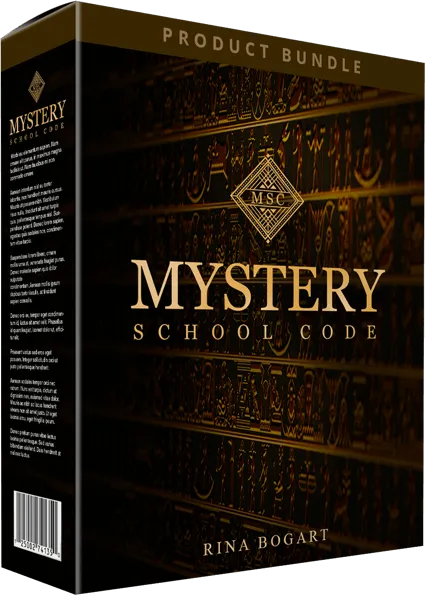
The Mystery School Code program box, printed in gold on a black hieroglyph background with the MSC diamond emblem and the name Rina Bogart

How big is the affiliate layer around this product?

Large, and still growing. We will not invent a number for it, but the pattern is easy to observe for yourself: search the product name and nearly everything returned is a review-shaped page that ends in a buy button. Two lookalike domains very close to the vendor’s own already rank with near-copies of the sales letter, which is why a reader can scroll through five “reviews” and come away having read the same three paragraphs in five different typefaces.

Should you dismiss every affiliate review on principle?

No. It would be convenient for us to pretend otherwise, since we are one. An affiliate page can be researched, purchased, tested and honestly written; a page with no commercial interest at all can be lazy and wrong. A commission is a reason to check the work, not a reason to skip it. What separates the two is whether the writer produced anything the vendor’s own copy could not have supplied, which is precisely what the checklist further down tests for.
Why Do Most Reviews of ClickBank Spiritual Products Read Alike?

Because most of them descend from the same document. This is not a conspiracy; it is the ordinary mechanics of affiliate publishing, and understanding those mechanics tells you more about a review than any amount of reading between its lines.

What is vendor swipe copy, and why does it spread so far?

When a vendor lists a product on an affiliate network, they typically also publish an affiliate resource page: email sequences, banner ads, headline suggestions and pre-written promotional text, collectively known as swipe copy. It exists to make promotion frictionless, and it works. A writer who starts from swipe copy inherits the sales letter’s structure, its origin story, its benefit list and often its exact adjectives. Ten pages built that way are not ten opinions; they are ten paraphrases of one marketing asset. If you have noticed that Mystery School Code reviews tend to share the same headings in the same order, that is why.

Does a reviewer have to buy the product before publishing?

Nothing requires it. An affiliate can be approved to promote a product, receive a tracking link, read the sales page and publish a two-thousand-word “review” the same afternoon without ever completing a purchase. Nothing in the technical setup prevents that, and for a $39 product the economics actively discourage buying: the commission on a handful of sales covers the purchase, so a writer chasing volume across dozens of offers will usually skip it. That is why “did this person actually see the members area?” is the highest-value question you can ask of any review.

How does the commission structure shape the tone?

It pushes everything towards mild, uniform enthusiasm. A page only earns if a reader clicks through and buys, so criticism has a direct cost and praise does not. The rational move for a volume publisher is a review that sounds balanced, with a token “cons” section listing things that are not really drawbacks (“only available online,” “requires consistency”), while never raising an objection that might actually stop a sale. When a cons list contains nothing a buyer would care about, you are looking at a sales page wearing a review’s clothes.

Why is the spiritual category especially prone to this?

Because the product claims are not testable, so there is nothing for a lazy reviewer to get caught on. A reviewer of a laptop who never opened the box will be exposed within a paragraph. A reviewer of a frequency audio can write confidently about resonance, ancient traditions and subconscious alignment without ever pressing play, because none of it can be checked. The only checkable parts of a product like Mystery School Code are the mundane ones: the checkout, the file, the members area, the refund route. That is exactly why those are the parts to look for.

One source document, rewritten many times over
Praise pays and criticism costs: weigh reviews accordingly

Why do so many Mystery School Code reviews sound the same? Because they mostly start from vendor-supplied swipe copy rather than from a purchase. A page built on that material inherits the sales letter's structure, story and phrasing, so what looks like a dozen independent opinions is often one marketing document rewritten a dozen times.

How Can You Tell a Real Review From a Rewritten Sales Page?

By looking for the things a non-buyer cannot fake. Run any Mystery School Code review (including this site’s) through the ten checks below. A page that fails most of them is marketing; a page that passes most of them is worth your attention even if you disagree with its conclusion.

  1. Does it describe the actual purchase flow? A buyer can tell you what the order form asked for, what the confirmation email looked like, and how access was granted. A non-buyer skips straight from “click the button” to “you get instant access.”
  2. Does it name specific limitations? Not soft ones. Something a reader might act on: how little content there is, what the product does not include, who should not buy it.
  3. Does it state what it could not verify? Honest reviewers mark the edges of their own knowledge. A page with no uncertainty in it has not done any checking.
  4. Does it disclose the affiliate relationship in plain sight? Not buried in a privacy policy. Visible text a reader will actually pass.
  5. Does it quote figures that exist nowhere else? A customer count, a star average, a success percentage or a “scientifically proven” statistic that no source supports is the single strongest fabrication signal.
  6. Does it repeat the vendor’s origin story as established fact? Marketing narrative presented as history (ancient lineages, named historical figures, precise numbers of years of research) means the writer copied rather than checked.
  7. Does the cons section contain a real objection? “Only available online” and “you have to be consistent” are not drawbacks; they are benefits wearing a costume.
  8. Are the testimonials attributed and checkable? Stock-photo faces with first names and no way to verify anything are decoration. A “verified buyer” badge that the site itself printed verifies nothing.
  9. Does it get the refund terms right, with the nuance? Repeating one headline number without mentioning the platform’s own standard window is the classic tell of a page that read the sales letter and stopped there.
  10. Would the page still be useful if you decided not to buy? A genuine review leaves you better informed either way. A rewritten sales page has nothing left to say once you have said no.

Two practical extras. Paste a distinctive sentence from any review into a search engine in quotation marks. If it appears on four other domains, you have found the swipe copy. And check the publication date against the claims: pages dated after a product launch that describe “months of testing” are worth a second look.

Where Do the Independent Reviews Agree, and Where Do They Contradict Each Other?

They agree on everything factual and checkable, and they split on two points that matter to a buyer. The agreements are worth trusting precisely because they are the boring details a copywriter has no motive to invent. The contradictions are worth knowing about because they are the ones you will have to resolve at the checkout yourself.

PointStatus across reviewersWhat it means for you
Format: one 120-second track plus a reading moduleAgreedReliable. Every source describes the same deliverable.
Price: $39 one-timeAgreedReliable at the time of writing; ClickBank offers do change.
Creator: Rina BogartAgreedConsistent everywhere, including the vendor’s page.
Delivery: instant digital access, nothing shippedAgreedReliable. No physical item exists.
Stated guarantee: 365 days on the vendor’s pageAgreed on the wordingBut ClickBank’s own marketplace standard is 60 days, so check the current terms at checkout.
The package is content-lightAgreedEven favourable reviews say so. Expect a short track, not a course.
Companion module included?ContradictedThe vendor’s page names the module and one independent review treats it as included; another states no bonuses are included at all. Confirm on the order page.
Lifetime access?UnconfirmedClaimed in review blogs; we could not confirm the word on the vendor’s order block. Do not assume it.
Upsells after checkout?UndocumentedNo source describes the post-purchase funnel either way. Read every checkout screen.
Evidence that the audio does anythingNone presentedNo reviewer presents independent testing. The most critical source says so outright.
Safety guidance for frequency audioRaised by one reviewer onlyFlagged as missing by biopreneur. Consult a doctor first if you have epilepsy or a pacemaker, or are pregnant.

The bonus contradiction is the one to take seriously. It is the difference between what you are told you are buying and what arrives, and it is genuinely unresolved in the published record. Since the refund route is the only way to act on it after the fact, it is worth understanding before you order. We cover the mechanics on the no-free-trial and refund guide.

What do independent reviewers actually disagree about? Two things: whether the companion reading module is included at all, and whether access is lifetime. The vendor's page names the module, one independent review says no bonuses are included, and the lifetime claim appears only in review blogs. Confirm both on the order page before you buy.

What Are the Vendor’s Own Testimonials Worth as Evidence?

As evidence, very little. That is a statement about the format, not an accusation against this vendor. A testimonial published on a sales page has been chosen by the seller, from submissions the seller received, edited to the length the seller wanted, and placed where the seller decided it would work hardest. Every step of that pipeline runs through the party with the incentive.

We are not reproducing the vendor’s testimonials here, because republishing them would lend them a credibility that our page cannot supply. If you want to read them, they are on the vendor’s sales page, which we reference but do not link as a matter of policy.

Why does a “verified buyer” label mean nothing here?

Because the label is only as good as the verification behind it, and a self-printed badge has none. On a marketplace that matches reviews to order records, “verified purchase” is a real check performed by a party with no stake in the outcome. On a sales page or an affiliate page, the same two words are typeset text that anybody can add in thirty seconds. There is no independent platform verifying purchases for this product at all, so the phrase cannot be meaningful anywhere in its review landscape. This site does not use the label on anything, for that reason.

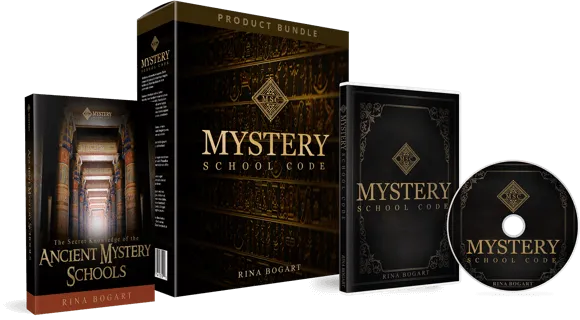
Mystery School Code complete program line-up: the gold-on-black program box, disc and case, and the Ancient Mystery Schools companion book

What Did This Site Do Differently?

We bought the program, followed the two-minute routine over an extended period, and wrote down the parts that can be checked: the checkout, the file, the members area and the refund route. We publish an editorial score that is labelled as our opinion rather than dressed up as a customer average, and we left out every claim we could not source, including anything about what the audio does to a listener.

That is the whole of our differentiation, and it deliberately stops short of a verdict on this page. The findings themselves belong on the hands-on Mystery School Code review, and a plain-language breakdown of what the program includes sits on the benefits page. Read either of those if you want our conclusions; this page exists so you can judge everyone’s conclusions, ours included.

Check the Current Price and Terms

Opens the vendor’s ClickBank order page: $39 one-time, as listed at the time of writing

Should you trust a review that has no criticism in it? Treat it as advertising. Every product has trade-offs, and a page that cannot name one has either not examined the product or has decided not to tell you. The useful reviews of Mystery School Code are the ones that say what it lacks and what they could not confirm.

How Should You Decide When the Evidence Base Is This Thin?

Stop trying to settle the question with reviews, because they cannot settle it. Shift the decision onto things you can actually establish: what the product is, what it costs, what happens if you want your money back, and how much you are willing to spend on an unproven experiment.

Which questions can the review landscape genuinely answer?

A narrow but useful set. Every source agrees on the format, the price, the creator and the delivery method, and those agreements are trustworthy for the ordinary reason that nobody benefits from lying about them. The reviews can tell you what you are buying. They cannot tell you whether it works, because not one of them contains a test.

Does thin evidence mean this is a scam?

Those are different accusations. A product can be delivered exactly as described, refunded without argument and still have no evidence behind its central claim. That describes a large share of the self-help market. The question of whether the vendor does what it says at the point of sale is a separate analysis, and we keep it separate on the scam-question page.

What is a sensible way to size the decision?

Treat $39 as the number you are actually risking, and ask whether that amount is comfortable discretionary spending for you with no return at all. Then read the refund terms before ordering rather than after, note the date you bought, and keep the receipt. If you would not be relaxed about losing the money, the thin review record is a reason to wait, not a reason to look harder for a review that will make the decision for you.

What would change how we read these reviews?

A genuine corpus. If a Trustpilot profile appeared with a few hundred entries, or a substantial forum thread of unpaid first-hand accounts turned up, that would be new information and this page would be rewritten around it. Independent testing of the recording would matter even more. Until one of those exists, the honest position is the one stated at the top: the reviews are thin, most of them repeat one document, and nobody, including us, can hand you a crowd’s verdict on this product, because there is no crowd.

The short version: use the reviews to learn what Mystery School Code is, not whether it works. On the first question the published record is consistent and useful. On the second it is empty, and no amount of further reading will fill it.

Mystery School Code Reviews: Frequently Asked Questions

No. We looked for a Trustpilot profile, a Better Business Bureau file, a G2 listing and a Capterra entry for Mystery School Code and found none of them. That is normal for a single $39 digital product sold through ClickBank rather than a company selling software or services, but it does mean there is no independent aggregate rating for anyone to quote. If you see a site displaying a star average for this program, ask which platform collected it.

A small number, yes. Two independent review blogs, biopreneur.com.ng and abundanceadvice.com, have published Mystery School Code write-ups that go beyond the sales page, name limitations and disagree with the vendor on some points. Both still carry affiliate links, so read them as informed commentary rather than neutral testing. Beyond those, most of what ranks for the product name is affiliate content that paraphrases the vendor's own copy.

Because most of them start from the same source text. ClickBank vendors supply affiliates with ready-made promotional material, and a page built from that material inherits the sales letter's structure, its story and its phrasing. When ten Mystery School Code reviews share the same headings and the same anecdotes in a different order, you are usually reading ten rewrites of one document rather than ten separate opinions.

Look for evidence of purchase and evidence of limits. A real review describes the checkout and the members area, names things it disliked, states what it could not verify, and discloses its affiliate relationship. A rewritten sales page does the opposite: it praises everything, repeats the vendor's story as fact, quotes figures that appear nowhere else, and never mentions a single drawback of Mystery School Code.

We could not find a substantial Reddit discussion of Mystery School Code. There is no active thread with a meaningful number of first-hand accounts, which is the usual pattern for a low-priced spiritual info-product that sells mainly through affiliate traffic rather than word of mouth. Treat any page that claims to summarise "what Reddit says" about this program with caution unless it links the thread.

There is no way for a reader to verify them. Testimonials published on a vendor's own sales page are selected and formatted by the vendor, with no third party checking that the person bought the product or that the words are theirs. That is true of this product and of almost every direct-response sales page, so vendor testimonials for Mystery School Code should carry roughly the weight of an advertisement, because that is what they are.

It does not have one, because no platform collects ratings for it. This site publishes an editorial score on our hands-on review page, clearly labelled as our own opinion, and we deliberately do not present it as a customer average. Any site showing a precise customer rating and review count for Mystery School Code is showing you a number it cannot source.

The clearest contradiction is the companion material. The vendor's page names a reading module called "The Secret Knowledge of The Mystery Schools" and one independent review describes it as included, while another independent review states plainly that no bonuses are included at all. Reviews also differ on whether access to Mystery School Code is lifetime, a claim that appears in review blogs but that we could not confirm on the vendor's order block.

Which Sources Sit Behind This Analysis?

Four sources, plus the vendor’s own sales material. There is no Trustpilot profile, BBB file, G2 listing or peer-reviewed study for this program, so none is cited. No customer star rating appears anywhere on this site, because none exists to report.

  1. Mystery School Code official sales page (vendor). Read for the price, the stated guarantee wording, the creator credit, the companion module name and the on-page testimonials discussed above. Referenced in prose only: as an affiliate site we do not link the vendor’s domain.
  2. ClickBank Customer Support, refund policy and order lookup: support.clickbank.com. Source for the 60-day marketplace refund standard set against the vendor’s longer stated window.
  3. US Federal Trade Commission, Health Products Compliance Guidance: ftc.gov. The basis for how this site treats testimonials, disclosure and unproven claims.
  4. Biopreneur, independent review of the program: biopreneur.com.ng. One of the two substantive independent write-ups; source for the criticism that the marketing overstates the claims, and for the missing safety guidance noted in the table.
  5. AbundanceAdvice, independent review of Rina Bogart’s program: abundanceadvice.com. The second substantive independent write-up; source for the “no real proof that it works” position and for the contradiction over whether bonuses are included.

About This Analysis

Written & reviewed by: Mystery School Code Editorial Team

This page was written by the Mystery School Code Editorial Team. We searched the major consumer-review platforms for a profile, read the independent write-ups that exist, compared them against the vendor’s own sales material, and reported the gaps rather than filling them. We are not the vendor and this is not the official website. This page contains affiliate links, and we may receive compensation if you buy through them at no extra cost to you. Last updated September 11, 2026.