Mystery School Code has no free trial. There is no trial tier, no limited free version and no sample track offered anywhere on the order page. The only way to hear the audio is to buy it for $39.
That is the whole answer, and we would rather give it to you in the first two sentences than bury it under a pitch. If you searched for a free trial because you did not want to pay before knowing whether this suits you, that instinct is sound, and it is still serviceable here. It simply runs through a different mechanism: the money-back window. This page is about that mechanism: what it really is, which of the two circulating guarantee numbers you can lean on, how a refund is actually requested, and how to run a genuine test inside the window instead of forgetting about it until the deadline has gone.
We are an independent review site, not the vendor. The rest of our coverage lives in our hands-on Mystery School Code review; this guide stays narrowly on trials and refunds.
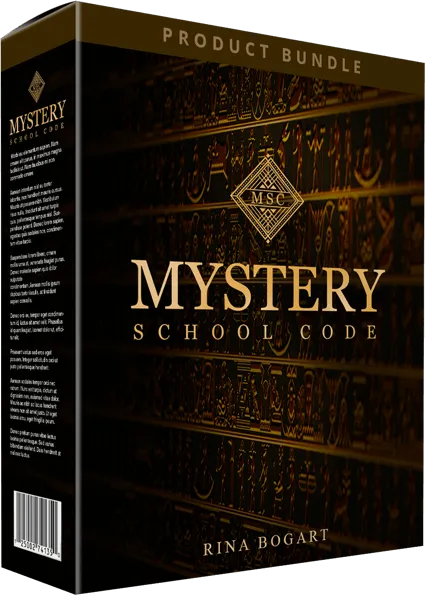
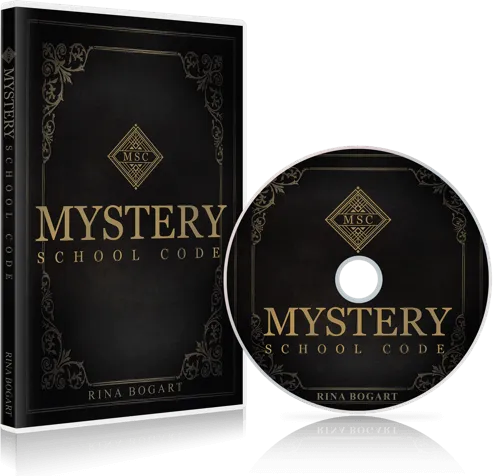
Two sentences of context, then back to the subject. Mystery School Code is a digital program built around a single 120-second audio track plus a companion reading module called "The Secret Knowledge of The Mystery Schools"; it was created by Rina Bogart, is sold through ClickBank for $39 as a one-time payment, and is delivered instantly through an online members area with nothing shipped. If the delivery mechanics are what you are really after, that is the subject of our guide to the online program rather than this one.
Is there a Mystery School Code free trial? No. There is no free trial, no free tier and no sample track. Mystery School Code is a single $39 one-time purchase, and the risk reversal attached to it is a money-back window rather than a trial. You pay first, use the program, and request a refund if it is not for you.
Because with a deliverable this small, the trial and the product are the same object. That is a structural point about the format rather than a defence or an accusation, and it is worth understanding before you decide the missing trial is a red flag.
Think about what a trial normally does. A software trial hands you the app with a clock on it, and when the clock runs out you no longer have the tool. A meditation app gives you seven days of a library you could not exhaust in seven days. In both cases the trial is a slice of something larger, and what you would still be missing afterwards is exactly what you pay for.
Mystery School Code has no larger remainder. The core asset is one two-minute recording. Hand it over for a day and the buyer simply has the file; hand over thirty seconds of it and they have heard a third of the product and learned nothing useful, because the vendor's own instruction is that the routine depends on repeated daily listening over time rather than one impressive listen. There is no slice that is both meaningful and not the whole thing. That is why single-asset info-products in this category overwhelmingly use a refund promise instead of a trial, and it is a reason rather than an excuse.
It does, quietly. ClickBank is the retailer of record here: it takes the payment, issues the receipt and owns the refund machinery. Its marketplace is built around one-time and recurring purchases with a published refund standard behind them, not around trial licences that expire. A vendor on that platform who wanted a true free trial would have to build and police the access control themselves, for a product whose entire content is one downloadable file. In practice the platform's refund policy is the risk reversal nearly every seller on it reaches for.
On its own, no. Plenty of ordinary digital products decline to offer trials, and plenty of questionable ones offer them enthusiastically. The absence of a trial is a fact about the business model, not evidence about the seller. If legitimacy is your real question, the analysis of what can and cannot be verified about this vendor sits in our scam-or-legit breakdown, not here.
It works the way a trial does, with the order of events reversed. In a trial you test first and pay later; in a refund window you pay first, test with full access, and get the money back if you ask in time. The end state can be identical. The difference is entirely in who holds your $39 while you decide, and in how much of the process depends on you remembering to act.
Three things, and none of them is hidden. They are just easy to read past on a sales page.
Most people who feel let down by a guarantee were never refused. They simply never asked. The single most useful instruction on this page is the one further down: put a decision date in your calendar on the day you buy.
It suits someone for whom $39 is genuinely discretionary, who is organised enough to keep a receipt and diary a date, and who is curious rather than desperate. It suits people who would try the thing anyway and want a route back out.
It does not suit anyone who needs that money to stay in their account, anyone who lets admin slide, or anyone buying because they hope a purchase will fix something urgent. If you are in the last group, no refund policy is protection: the honest move is to spend nothing at all, and our page on what genuinely costs nothing in this space is a better starting point than this one.
Does the money-back window make the purchase risk-free? Not quite, and the difference matters. Your $39 is charged up front and only returns if you notice the deadline and send the request yourself. A refund window is a route out of a purchase, not the absence of one. Treat it as a commitment with an exit, and diary your decision date on the day you buy.
Plan around 60 days. Both numbers are real, but they come from different places and they do not carry the same weight. Almost every affiliate page about this product quotes only the bigger one.
The 365-day figure is the vendor's own. Their sales page states a full-year money-back guarantee with requests handled by email, and adds that refunds are processed within 48 hours. That 48 hours is a stated processing speed, not the length of the window, and it is regularly misreported as one.
The 60-day figure is the platform's. ClickBank is the retailer for this sale, and its published marketplace refund standard on digital products is 60 days. That is the number backed by the company that actually holds the transaction.
A vendor may voluntarily honour a window longer than the platform requires, and some do. But a promise a seller extends on their own runs on that seller's goodwill, whereas the platform standard is enforced by the platform. If you buy intending to decide in month seven, you are relying on the first kind. If you decide inside two months, you are relying on the second. We will not tell you the 365-day promise is worthless (we have no evidence either way about how this vendor handles late requests), but we will not present it as a right you can bank on either.
Terms on ClickBank offers change without notice, so the page in front of you at checkout is the authority, not this one. Before you pay: read the guarantee wording on the order form itself, note the exact amount being charged, check whether anything is described as recurring, and read every screen that appears after payment rather than clicking through it. We could not observe this product's post-purchase flow, so we neither claim there are extra offers nor promise there are none. Read, then click.
Our working rule: treat 60 days as the number you can count on, treat anything past it as the vendor's discretion, and make your decision early enough that you never need to find out which one applies to you.
Start from the ClickBank receipt email, use ClickBank's own support route as the primary channel, and email the vendor in parallel. The sequence below is the practical heart of this page, the part worth keeping open in a tab if you have decided to ask for your money back.
One honest limitation on all of the above: a refund request always depends on a vendor and a platform responding to it. We can describe the route; we cannot promise the outcome. No complaint archive or refund-dispute record for this specific vendor turned up in our research, and there is simply no public data either way. So we can tell you what the correct process is, and we cannot tell you how this seller behaves at the end of it.
Affiliate link: the vendor's order page carries the live price and guarantee wording.
Who processes the refund, the vendor or ClickBank? ClickBank is the retailer of record for this product, so its customer-support route is the one that can reverse the charge inside the platform's stated window. Email the vendor at their published support address in parallel, since their own policy runs longer, and keep the ClickBank receipt either way. The order number on it is what both routes ask for first.
Decide on a fixed test period before you start, record a few simple things while it runs, and judge at the end against what you wrote down rather than against what you hoped. This is a method for evaluating a routine honestly. It is not a plan for producing an outcome, and nothing here predicts one. No result of any kind is promised by this site.
Before you listen to anything, do the admin. Save the ClickBank receipt into a folder you will find again. Put two entries in your calendar: a decision date four to six weeks out, and a hard backstop several days before the 60-day platform window closes. Download the audio file rather than relying on streaming it, so a members-area hiccup never becomes your excuse to stop. Then write one line about why you bought it: what you were actually hoping to change about your day. That line is what you will grade against later, and memory is a poor substitute for it.
Front-load it. The first week is when a refund decision is cheapest to reverse and when you learn the most, so treat it as the part of the window that actually matters. Use ordinary earbuds rather than a phone speaker, keep the volume moderate, and give the track your attention instead of running it behind email. Read the companion module once during this week so you know what you bought before the decision date arrives. Mark a simple tick each day you listened. That tick is your first piece of data, and it is about you, not about the audio.
Keep it to things you can observe rather than things you have to interpret. Whether you listened that day. Whether you had to force it or it happened easily. Whether the two minutes produced any pause in the day at all, or whether it dissolved into scrolling. One word about your general state, chosen before you listen rather than after. Thirty seconds of notes a day is enough. A log you dread is a log you abandon, and an abandoned log tells you nothing at the end.
Notice what that list deliberately leaves out. It contains no financial numbers and no health markers, because we make no claims of either kind and neither should your test. What you are measuring is whether a two-minute daily practice is something you will keep doing, and whether it does anything for how your day starts. That is a real question and it has a real answer.
On your decision date, read your own notes before you think about it. Then ask three questions. Did you keep it up without forcing it? Did the two minutes earn their place in the day? And would you, knowing exactly what is in the package, pay the $39 again today?
If the answer to the third is no, request the refund that week rather than telling yourself you will give it another month. If it is yes, close the window in your head and stop evaluating: a routine you are permanently auditing is not a routine. Either answer is a good outcome for a test. The bad outcome is the one where you never decided and the date went past.
If it helps to see what the package is being judged on, our breakdown of what the program does and does not include covers that ground in more detail than this page needs to.
Four ways of letting someone try before they fully commit, compared on the three things that actually differ: what leaves your account up front, what you stand to lose, and what you personally have to remember to do. The columns describe categories in general terms, not any one named competitor.
| What matters | Mystery School Code No trial + refund window | Free-tier app Free forever, paid upgrade | 7-day subscription trial Card on file | No-refund digital sale All sales final |
|---|---|---|---|---|
| Paid up front | Yes, $39 | Nothing | Usually nothing | Yes |
| What you risk | The $39, until a refund is processed | Time only | An unwanted renewal charge | The full price, permanently |
| What you must remember | To request the refund in time | Nothing | To cancel before renewal | Nothing, because there is no way back |
| Access while testing | Complete | Limited features | Usually complete | Complete |
| Who enforces the exit | ClickBank, 60-day standard | Not applicable | App store or seller | Nobody |
| Recurring charges | None (one-time) | Only if you upgrade | Yes, once the trial ends | None |
| Typical failure mode | Forgetting to ask by the deadline | Never upgrading | Forgetting to cancel | Regret with no exit |
The pattern across the first, third and fourth columns is the same: the model is only as good as your memory. A free tier is the one row where forgetting costs you nothing at all.
Is a refund window better or worse than a 7-day trial? It is a trade rather than an upgrade. A refund window gives you complete access for far longer than a week, which suits a routine meant to be repeated daily, but your money is gone in the meantime and the exit depends on you asking for it. A subscription trial keeps your money where it is and moves the deadline onto cancellation instead.
Four, stated plainly, because a page about getting your money back should be the last place to oversell anything.
And the caveat that matters most on a page like this one: there is no free trial, no free version and no legitimate free copy of this program. If a site is offering you one, the thing to read next is our guide to why no free download exists and what those pages are really after.
No. Mystery School Code has no free trial, no trial tier and no time-limited free access. The order page offers a single $39 one-time purchase, and the only way in is to pay for it first. What stands in place of a trial is the money-back window, which means you buy, use the program, and ask for your money back if it is not for you.
No free version, free tier or sample track is offered on the Mystery School Code order page. The product is a single 120-second audio track plus a companion reading module, so a preview would effectively be the whole thing. Any site advertising a free copy is not the vendor, and we explain the risk behind those pages in our Mystery School Code free download guide.
The vendor's sales page for Mystery School Code states a 365-day money-back guarantee, with refund requests handled by email. The program is sold through ClickBank, whose published marketplace refund standard on digital products is 60 days. Sixty days is the platform-backed number we would plan around; treat anything beyond it as the vendor's own policy and confirm the current terms on the order page before you pay.
Start from the ClickBank receipt email you were sent at purchase, because it carries the order number every refund route asks for. Take that order number to ClickBank's own customer support at support.clickbank.com, and send a short parallel email to the vendor at [email protected]. Keep both messages, the date you sent them and any reply, so you have a record if you need to follow up.
Both, and ClickBank first. ClickBank is the retailer of record for Mystery School Code and processes the payment, so its customer-support route is the one that can actually reverse the charge inside the platform's stated window. Emailing [email protected] in parallel is still worth doing, because the vendor's own published policy runs longer than the platform standard.
No. Nothing physical ships with Mystery School Code, so there is nothing to post back. The whole product is delivered through an online members area. A refund reverses the payment to the card or account you used, and the sensible assumption is that your access to the program ends with it. We have no data on how quickly this particular vendor settles requests, so keep your receipt until the money appears.
Give Mystery School Code a stretch of consistent daily use rather than a few scattered listens, and set your own decision date well inside the refund window instead of on its last day. The routine is about two minutes a day, so four to six weeks of it costs you roughly an hour in total. Nothing here predicts an outcome. The point of a fixed test period is that you decide on evidence you gathered, not on how you feel the day you are asked to choose.
Send one polite follow-up with the same order number, then escalate through ClickBank rather than the vendor, since ClickBank holds the transaction for Mystery School Code. Keep copies of every message and the dates. A card chargeback exists as a last resort, but it is a serious step that can close your account with a platform, so use the documented refund route fully before considering it.
Three published sources, plus the vendor's own sales material. As an affiliate site we do not link the vendor's domain, so their page is referenced in prose only. No customer rating is quoted anywhere on this page, because no rating corpus for this product exists to quote.
Written & reviewed by: Mystery School Code Editorial Team
This guide was written by the Mystery School Code Editorial Team. We read the vendor's sales material and ClickBank's published support documentation, and we state plainly that no free trial exists rather than implying one to win a click. Where we have no data, such as how this vendor handles refund requests in practice, we say so instead of guessing. We are not the vendor and this is not the official website. This page contains affiliate links, and we may receive compensation if you buy through them at no extra cost to you. Last updated September 11, 2026.