Last Updated: September 11, 2026| Written by Mystery School Code Editorial Team| 9 Min Read
Mystery School Code Free Download: Is There a Legitimate Free Copy?
No. There is no legitimate free download of Mystery School Code: no free version, no sample track, no trial file and no “lite” edition. It is a paid digital product, priced at $39 as a one-time payment at the time of writing, and it is delivered through an online members area once a ClickBank order goes through.
That is the whole answer, and we would rather give it to you in the first line than bury it under a thousand words. This is an independent review site rather than the vendor, so we have no free copy to hand out either.
The rest of this page is the part that is actually worth your time: what “download” genuinely means for a product like this one, and what is waiting behind the search results you were about to click. Pages that promise a free copy of a paid file are one of the most reliable ways to pick up malware, hand over a card number, or lose a password. That risk is identical whether the product is a $39 audio track or a $500 software suite.
Is there a free download of Mystery School Code? No. The program is sold only as a $39 one-time digital purchase through ClickBank, and the files sit behind a members-area login that opens after payment. The vendor publishes no free sample, no trial download and no partial version, so any site offering the complete program at no cost is distributing it without permission, and is funding itself some other way.
What Does “Download” Actually Mean for This Product?
It means saving a file you already paid for out of a members area. It does not mean installing software, and it does not mean subscribing to a stream.
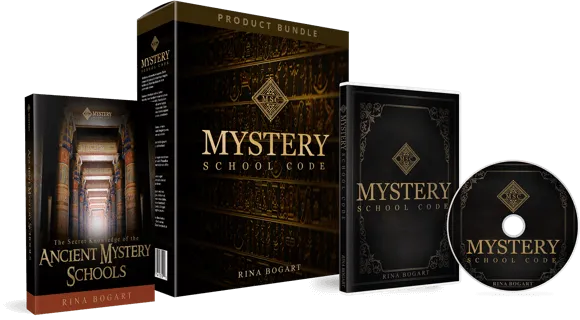
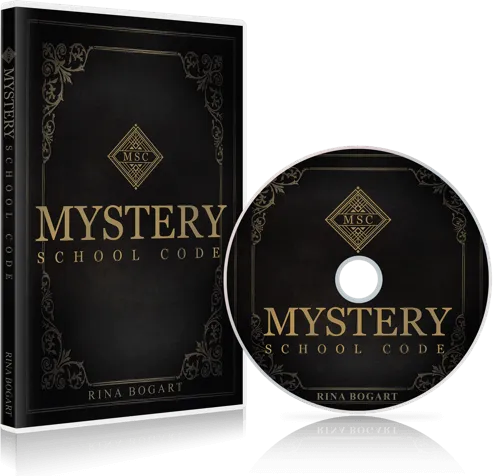
Mystery School Code is small: one 120-second audio track plus a companion reading module called “The Secret Knowledge of The Mystery Schools”. After a purchase clears, ClickBank issues a receipt, the receipt carries a link into the vendor's members area, and inside that area the material can be played in the browser or saved to your own device. Nothing is posted to you; there is no disc arriving in an envelope, despite the artwork.
So “downloading it” is a normal, boring step that happens after you own it. It is not a separate way of getting the product, and that misunderstanding is exactly what sends people looking for a free file in the first place.
Should the download ever be an installer?
No. There is no app-store listing, no installer and no setup wizard associated with this program. That single fact is the most useful filter on this page: if something calling itself Mystery School Code arrives as an executable, a setup file or a “download manager”, it is not the product, because the product has no software component to install.
Is it a streaming subscription you keep paying for?
No. The $39 is charged once and nothing renews, so there is no monthly fee to cancel and no account that lapses when a card expires. People sometimes hunt for a “free download” because they assume the alternative is an open-ended subscription. Here it is not. Our walkthrough of the online program covers what the members area holds and how access behaves day to day.
Why Are “Free Download” Results for Paid Products Dangerous?
Because the page has no product to sell you, which means you are what it monetises.
Consider the economics for a moment. A site publishing a free copy of a $39 product earns nothing from the file itself and still pays for hosting, domains and traffic. Something on that page has to cover the bill, and it is never generosity. Below are the patterns that show up again and again around paid digital products, described so you can recognise them, with no site named and no route to an unauthorised copy given anywhere on this page.
What do “cracked copy” pages actually deliver?
Usually not the product. The most common outcome is a file whose type does not match what was sold: you were promised a short audio recording and a reading module, and what lands is an installer, a setup program or a password-protected archive that insists you disable your antivirus before opening it. That instruction is the tell. No legitimate audio file has ever needed your security software switched off, and the request exists only because a scanner would otherwise flag what is inside.
How does bundled adware get onto a machine?
Through the wrapper rather than the file. Many of these pages hand you a small “download manager” or “accelerator” instead of a direct link, and that helper is the actual payload: it installs browser extensions, changes the default search engine, injects advertising into pages you visit, and often reinstalls itself after a casual removal. The clue is a multi-step consent screen where the continue button is bright and the decline option is a small grey line of text. Anything that must be installed before you can receive a two-minute audio track is not a delivery mechanism. It is the thing being sold to you.
Why do some download pages ask you to “verify you are human” with a card?
Because the verification is the scam. A genuine bot check never needs payment details; the moment a free-download page asks for a card number “just to confirm you are real” or “to hold your slot”, the page exists to collect card numbers and the download will never appear. A variant charges a small “verification fee” and quietly enrols the card in a recurring billing arrangement buried in fine print. Real digital purchases go through a processor you can name (ClickBank, in this product's case) and issue a receipt with an order number you can look up later.
What is the point of survey walls and phone confirmations?
They convert your attention and your phone number into cash. A survey wall pays the operator per completion and typically ends by cycling you through more offers rather than unlocking anything. A “confirm your number to receive the link” step is worse, because in some regions it can enrol you in a premium messaging service that appears on the next phone bill, and because a verified live number is itself a resaleable asset that leads to months of calls and texts. Notice the shape of it: you never actually reach a file.
Could the file simply be the wrong audio?
Frequently, yes. This is the harmless-looking end of the range. Renaming an unrelated track to match a product name costs nothing, and audio is unusually easy to pass off because there is no packaging to inspect and no way to tell by listening whether a recording is the one the creator made. Someone who takes that file is not comparing Mystery School Code with anything; they are listening to a random clip while believing they have tested a product, which is a poor basis for any opinion, including a negative one they might post afterwards.
How does a fake “members area” login steal an account?
By looking exactly like the real one. Some pages skip the file entirely and present a sign-in form styled to resemble a customer portal, a marketplace account or an email login, then keep whatever you type. The real damage is rarely the site itself: it is password reuse. One address and password harvested from a fake download page get tried automatically against email, banking and shopping accounts, and the ones sharing those credentials open. Never typing a password on a page you reached from a search for free files removes most of this risk on its own.
If a “free” page asks you to disable antivirus, close the tab
No download page ever needs a card to prove you are human
None of this is specific to one program. It is the standard economics of pirated digital goods, and it is why searching a product name plus “free download” is one of the riskier queries an ordinary person can run.
What is the clearest single warning sign? Being asked to install something, disable protection, complete a survey, confirm a phone number or enter a card before the file appears. A real digital purchase reverses that order: you pay a named processor once, then the material is simply there in your account with no gate standing in front of it.
How Do You Recognise a Download That Is Safe?
Four checks, in order: where the link came from, which domain it sits on, what the file is, and who took the payment.
None of these require technical skill, and together they filter out almost everything described above.
The link came from your own receipt. Start from the confirmation email of the purchase you made, not from a search result, a forum post, a comment or a social message. Your receipt is the only route to a file you actually own.
The domain matches where you paid. Read the address bar before signing in anywhere. Lookalike domains (an extra word, a hyphen, a different ending) are the entire business model of credential phishing, and this product already has near-identical domains circulating around it.
The file type matches what was sold. An audio product should arrive as playable audio and a reading module as a document. An executable, a setup file or an archive demanding a password is a mismatch, and a mismatch is where you stop.
The payment went through a processor you recognise. Mystery School Code is retailed through ClickBank, which issues an order number and runs its own refund desk, so a real buyer always has a paper trail and a way back. A free-copy page gives you neither.
If you want the background on how the paid route actually behaves before committing to it, our hands-on Mystery School Code review covers the purchase, the delivery and the limitations we found.
Receipt, domain, file type, processor: check all four
Paid Purchase vs a “Free Download” Site: What Do You Get?
The same five questions asked of both routes, with no marketing adjectives in either column.
Question
Buying through ClickBank
A “free download” page
What do you actually receive?
The 120-second audio track and the companion reading module, in a members area, immediately after payment.
Unknown until you open it: commonly an installer, a wrapper, a survey loop or unrelated audio.
What does it cost?
$39 once, as listed on the vendor's order page at the time of writing. No subscription.
No price tag, but payment in attention, personal data, card details or a compromised device.
Is there a refund route?
Yes. ClickBank's standard marketplace window is 60 days, and the vendor's page advertises 365 days.
None. There is no order, no receipt and nobody to ask.
What is the malware risk?
Ordinary: a normal checkout and a normal file from the account you paid through.
High by design. Adware bundles, credential forms and disguised executables are the revenue model.
Where do you stand legally?
You bought a licensed copy from the retailer the creator chose.
Copying a protected work without permission is infringement, and sharing it on is treated more seriously.
Prices and guarantee terms can change. Confirm the current offer on the order page before buying, rather than trusting any figure on a review site, including ours.
Is Copying a $39 Digital Product Really a Big Deal?
Legally it is infringement; practically, the expected cost of the shortcut is higher than the price.
We are not going to lecture anyone. The short version is that an audio recording and a written module are protected works, copying or redistributing them without permission is infringement in the United States and most other jurisdictions, and uploading is treated far more seriously than downloading. Small independent digital products also have no enforcement budget, which is precisely why unauthorised copies of them circulate so freely, and why those copies are so rarely the real file.
The arithmetic is the more persuasive argument. Set the price at $39. Now price the alternative honestly: the time to clean an adware infection, the afternoon spent rotating reused passwords, the call to the bank, the small chance of a recurring charge you never agreed to, and the certainty of no refund route if the material turns out not to suit you. You do not need a high probability of anything going wrong for that expected cost to exceed thirty-nine dollars, and unlike the purchase it comes with no receipt and no way back.
There is a quieter cost too. The file someone obtained is often not the real recording. When it is not, any judgement formed about the program rests on something else entirely. That is worth remembering before concluding either that it works or that it does not.
Is a pirated copy really cheaper than $39? Only if nothing goes wrong, and nothing going wrong is not the usual outcome. One cleanup, one reused password to rotate, or one unexpected recurring charge already costs more than the product. An unauthorised copy carries no receipt, no refund window and no support address if it turns out not to be what you wanted.
What If You Already Downloaded Something Suspicious?
Do not run it, then work through the list below in order. Most of it takes under half an hour.
Do not open installers or archives. A file that was downloaded but never run has, in the ordinary case, done nothing at all. Opening it is the step that matters, so stop there.
Delete it and empty the bin. Remove the file and clear the recycle bin or trash so it cannot be opened absent-mindedly later.
Run a full scan. Use the security software already on the machine and let a complete scan finish rather than a quick one. Do not install a new “cleaner” recommended by the same page. Fake cleanup tools are a standard second act.
Change any password you typed on that page, and change it everywhere you reused it. Turn on two-factor authentication for your email account first, because email is the reset route for everything else.
Watch the card, and call the bank if you entered details. Contact your bank or card issuer the same day rather than waiting for a charge to appear; blocking a card is quicker than reversing a series of small recurring debits.
Check what changed in the browser. Remove extensions you did not install deliberately, and reset the default search engine and homepage if either moved.
Stop using any file whose origin you cannot account for. If you cannot point to the purchase it came from, it does not belong on your device.
If the page that worried you claimed to be an official customer portal, that is a phishing attempt rather than a piracy site, and the password step is the urgent one. For what the genuine post-purchase experience looks like (where the link arrives from and what greets you), see the online program guide.
What If You Genuinely Cannot or Will Not Pay?
Then take the free route that is actually free, rather than the one that bills you in other ways.
This is a legitimate position and it deserves a real answer rather than a sales pitch. There is a genuinely free route that involves no download page, no survey and no installer: material published free by its own creators on mainstream platforms, licensed for you to listen to at no cost. It is a real alternative and it is not what the pirate sites are offering you.
That comparison belongs on its own page, and we have written it: our guide to the free alternatives to Mystery School Code weighs what the free route gives you against the three things it costs you. The point here is narrower. If price is the obstacle, the answer is the legitimate free route, never a cracked file.
And if you decide the paid program is worth trying, buy it through the vendor's own checkout so the refund window exists if you change your mind. Our Mystery School Code overview summarises what the package contains before you decide.
Where does a real download link come from? From your own ClickBank order confirmation, which arrives by email straight after payment and carries an order number you can use to look the purchase up or request a refund later. If a link to Mystery School Code did not come from that receipt, treat it as unverified. Keep the receipt, because it is also your support and refund route.
Mystery School Code Free Download: Common Questions
No. There is no legitimate free download of Mystery School Code, and the vendor does not publish a free version, a sample track or a trial file anywhere. It is a paid digital product priced at $39 as a one-time purchase through ClickBank, and access is granted through an online members area after payment clears. Any page offering the full program as a free file is not distributing it with the creator's permission.
From the members area link that arrives with your ClickBank order confirmation, not from a public download page. After payment, Mystery School Code is delivered instantly online: you sign in, and the 120-second audio track and the companion module "The Secret Knowledge of The Mystery Schools" are there to play or save. Keep the receipt email, because it is also the starting point for a refund request or for regaining access if you lose the link.
It is a one-time purchase, not a subscription, and the material can be played in the browser or saved to your own device. Mystery School Code bills once at $39 with no recurring charge, so nothing renews and nothing needs cancelling. It is also not a mobile app. There is no install step, and nothing from an app store is involved.
Treat them as unsafe. A site that offers a paid digital product for nothing has no revenue from the product itself, so it earns from what it does to the visitor instead. That means bundled installers, adware wrappers, survey walls, or forms that harvest card details and passwords. We do not name or link any of those pages, and the practical advice is simple: if a download of Mystery School Code did not come from the account you paid through, do not open it.
Copying and distributing a paid digital product without the rights holder's permission is copyright infringement in the United States and most other countries, and uploading it is treated more seriously than downloading it. Beyond the legal position, the arithmetic rarely works: Mystery School Code costs $39 once, while a single compromised card or reused password can cost far more in time and money than that. The refund route that comes with a real purchase also disappears entirely with an unauthorised copy.
What was sold is an audio recording plus a reading module, so that is what a genuine download should look like: a playable audio file and a document. An installer, a setup program, a password-protected archive or a "download manager" is not what Mystery School Code consists of, and any of those turning up in place of an audio file is a reason to stop and delete it. File extensions can be disguised, so the origin of the link matters more than the icon you see.
Do not run it. Delete the file, empty the recycle bin or trash, and run a full scan with the security software already on the machine before you do anything else. If you typed a password on the page that offered the download, change that password everywhere you reused it and turn on two-factor authentication; if you entered card details, contact your bank the same day rather than waiting for a charge to appear. None of this relates to a real Mystery School Code purchase, which never asks you to install anything.
Yes, but it is not Mystery School Code. Free ambient, tonal and guided-audio recordings are widely published on mainstream video and streaming platforms by their own creators, and a daily two-minute listening habit can be built with those at no cost and no risk. Our separate guide to free options compares that route against the paid program honestly, including what you give up by taking it.
Affiliate link. We may earn a commission at no additional cost to you.
What Did We Check This Against?
Three outside sources plus the vendor's own material. We deliberately cite no piracy pages, no file-hosting services and no “crack” forums. Naming them would defeat the purpose of this page.
Mystery School Code official sales and order pages (vendor). Read for the $39 one-time price, the members-area delivery, the absence of any free or trial version, and the guarantee wording. Referenced in prose only: as an affiliate site we do not link the vendor's domain.
ClickBank Customer Support (order lookup and refund policy): support.clickbank.com. Source for the 60-day marketplace refund standard, for how an order number is issued, and for the fact that a real purchase always leaves a traceable record.
US Federal Trade Commission (compliance guidance for health and wellness marketing): ftc.gov. The basis for keeping every outcome claim off this page and for the results disclaimer carried in our footer.
Biopreneur (independent review of the program): biopreneur.com.ng. Corroborates the price, the digital-only delivery and the single short audio track, none of which is offered anywhere as a free file.
About This Page
Written & reviewed by: Mystery School Code Editorial Team
This page was written by the Mystery School Code Editorial Team. We are an independent review site, not the vendor and not the official website, and we have no free copy of this program to distribute. The download-risk guidance here is general consumer-safety material about pirated digital products; no piracy site is named, tested or linked, and nothing on this page explains how to obtain an unauthorised copy. This page contains affiliate links, and we may receive compensation if you buy through them at no extra cost to you. Last updated September 11, 2026.
Where Should You Read Next?
Each guide below answers a different question about Mystery School Code. They are written to be read on their own, so start with whichever matches what you are trying to decide.